
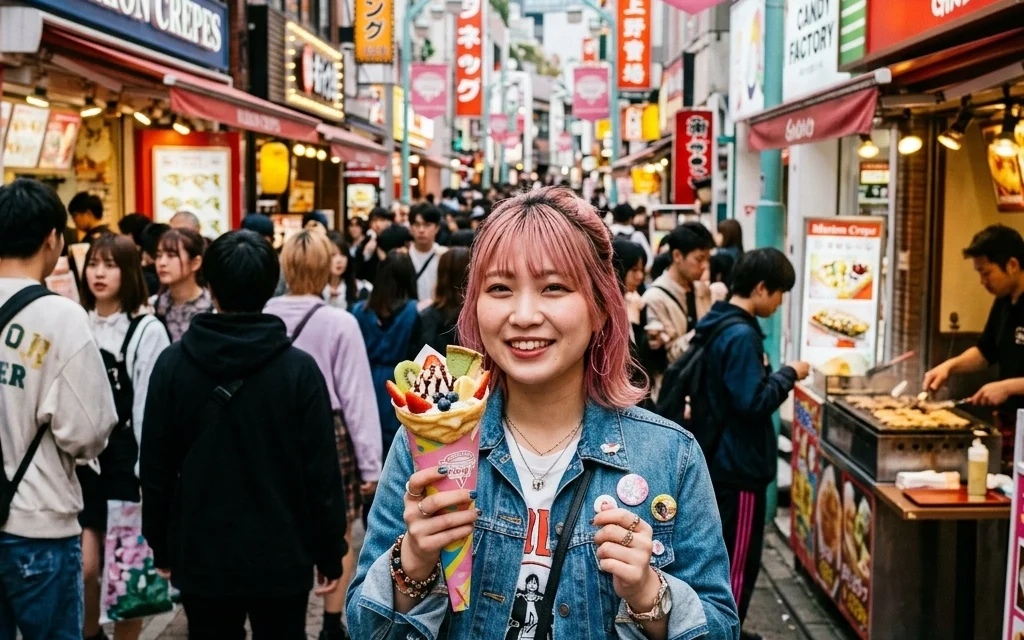
Welcome to Day 3 of our 14-day culinary deep dive into the heart of Tokyo. If you missed our previous stops exploring the neon-lit themed cafes of Akihabara or the refined, hushed elegance of high-end sushi in Ginza, you’ve got some catching up to do! But today, we’re trading in the Michelin stars for something a bit more… neon. And sugar-coated. And potentially served on a stick.
We are hitting the pavement in Harajuku.
Now, if you’ve ever seen a photo of someone holding a piece of cotton candy the size of a small toddler, or a crepe stuffed with an entire slice of cheesecake, chances are that photo was taken on Takeshita Street. This 400-meter stretch of madness is the beating heart of Japanese youth culture and, more importantly for us, the epicenter of Tokyo’s street food scene. It’s loud, it’s crowded, and it’s absolutely delicious.
But navigating this area isn't just about showing up and eating the first thing you see. To truly succeed in Harajuku, you need a strategy. You need to know how to balance the sugar highs with savory snacks, and how to capture it all for the 'gram without dropping your camera in a vat of chocolate sauce.
If you want the inside scoop without the stress of navigating the crowds yourself, I highly recommend booking a food tour through Viator. They’ll take you to the hidden gems that most tourists walk right past while they’re staring at the giant 3D cat billboard.
The Iconic Harajuku Crepe: A Rite of Passage
You cannot, under any circumstances, visit Harajuku without eating a crepe. It’s basically illegal. Since 1976, when Marion Crepes first opened its window, these thin, French-inspired pancakes have defined the neighborhood.
What makes a Harajuku crepe different? In France, you might get a sprinkle of sugar and a squeeze of lemon. In Harajuku, they treat the crepe like a structural engineering project. We’re talking whipped cream, fresh fruit, brownies, ice cream, and, as mentioned, entire slices of cheesecake, all rolled into a portable cone.

You’ll see two main rivals facing off on Takeshita Street: Marion Crepes and Santa Monica Crepes. Honestly? They’re both fantastic. Marion has the history and that classic blue-and-red vintage vibe, while Santa Monica often feels a bit more modern and flashy. My advice? Look at the plastic display models (which are works of art in themselves) and pick the one that speaks to your soul.
Pro Tip: If you're carrying around a heavy camera like I usually am, check out my essential photography gear list to see how I manage to shoot and eat simultaneously without ending up with whipped cream on my sensor.
The Savory Savior: Gindaco Takoyaki
By the time you’ve finished a crepe, your blood sugar will be high enough to power a small village. You need salt. Enter Gindaco.
Gindaco is a legendary chain, but their Harajuku location is a staple for a reason. They serve takoyaki, octopus balls, that are crispy on the outside and wonderfully gooey on the inside. They’re topped with a savory brown sauce, a drizzle of mayo, and a handful of bonito flakes that "dance" in the heat.
A word of warning, though: the inside of a takoyaki is essentially molten lava. Do not, I repeat, do not pop the whole thing in your mouth immediately. You will lose the roof of your mouth, and your tasting journey will be over before it truly began. Poke a hole in it, let the steam escape, and appreciate the craftsmanship. It’s the ultimate comfort food.
Beyond the Rainbow: Totti Candy Factory and Aesthetic Eats
Harajuku is the world capital of "Aesthetic Eating." If it isn't rainbow-colored, is it even Harajuku?
Totti Candy Factory is the place you’ve seen on every travel vlog. They specialize in giant, multi-colored cotton candy. It’s impressive to watch them spin it, each layer is a different flavor and color, resulting in a cloud of sugar that’s bigger than your head. It’s a nightmare to eat in the wind, but it’s a dream for your portfolio.

If you’re looking to up your food photography game while you’re here, you might want to read through our camera reviews 2024 to ensure you have a lens that can handle the vibrant colors and tricky lighting of Takeshita Street. For more personal insights into my shooting style, head over to my personal blog.
And then there’s the Strawberry Fetish. Yes, that is the real name. They serve tanghulu: candied strawberries on a stick. They are crunchy, sweet, and surprisingly refreshing amidst the chaos.
The Local Secret: Harajuku Gyoza Lou
If you need a break from the "street" part of street food, duck into a side alley to find Harajuku Gyoza Lou. It’s one of the most famous dumpling spots in the city, and for good reason. They keep it simple: fried or steamed, garlic or no garlic.
Get both. And definitely get the garlic.
It’s incredibly affordable, the vibe is lively, and it’s the perfect place to sit down for twenty minutes to rest your feet. It’s a favorite for locals and savvy travelers alike. When I’m scouting for my fine art photography, this is usually where I end up for lunch because it’s quick, consistent, and provides enough energy to keep me walking for another five miles.

DIY Deliciousness: Sakuratei Okonomiyaki
For those who want a bit more "experience" with their food, head to Sakuratei. It’s tucked away in the backstreets and is famous for its graffiti-covered walls and "cook-it-yourself" okonomiyaki (savory Japanese pancakes).
You get a bowl of batter, cabbage, and your choice of fillings (pork, seafood, cheese, etc.), and you grill it right on the hot plate at your table. It’s interactive, messy, and a total blast with a group of friends. It’s also one of the best photo ops in the neighborhood because the interior of the restaurant is a rotating gallery of street art.
How to Succeed: Navigation and Etiquette
Harajuku can be overwhelming. Here are a few tips to make sure you survive and thrive:
- Don't Eat While Walking: In Japan, it’s generally considered rude to walk and eat at the same time. Most stalls will have a small designated standing area. Stay there, enjoy your food, and then move on.
- Trash is Gold: Finding a trash can in Tokyo is like finding a unicorn. However, most street food stalls will have a bin for their specific customers. Don't carry your sticky crepe wrapper for three miles; toss it at the stall where you bought it.
- Timing is Everything: Takeshita Street is a nightmare on Saturday afternoons. If you want to actually see the pavement, try to go on a weekday morning.
- Cash is Still King: While many places are starting to take cards or IC cards (like Suica), many of the smaller stalls are cash-only. Keep a pocket full of ¥100 and ¥500 coins.

Capturing the Moment
As a photographer, Harajuku is a goldmine. The colors are saturated, the people-watching is world-class, and the food is designed to be looked at. If you’re struggling with the harsh midday sun in the narrow alleys, consider checking out some sky overlays to help balance out your outdoor shots later in post-production.
If you want to really capture the essence of the city with a professional touch, you can always check out our photography booking experience to see how we handle street sessions. And for the gearheads out there, don't forget to visit Shut Your Aperture for the latest community tips on street photography.
Wrap Up
Harajuku is more than just a place to grab a snack; it’s a sensory explosion that represents the playful, creative side of Tokyo. Whether you're face-deep in a rainbow grilled cheese or delicately nibbling on a gyoza, you're participating in a culture that celebrates the joy of the "now."
Stay tuned for Day 4, where we’ll be waking up early to hit the Tsukiji Outer Market for some of the freshest seafood on the planet. But for now, go get yourself a crepe. You’ve earned it.
And seriously, book that Viator food tour. Having a guide who knows which crepe stall is currently "in" and which one is "so last week" is a game changer. Plus, they know where all the secret bathrooms are. And in Harajuku, that is priceless.













