
Category: Photo Guides
If you’ve been in the photography game for more than a minute, you know the "editing wall." You come home from a breathtaking shoot, maybe a sunset in the Everglades or a wedding in the heart of Atlanta, and you’re faced with hundreds of RAW files. Your eyes start to glaze over as you think about the hours of manual masking, brushwork, and exposure balancing ahead of you.
I’ve been there. At Photoguides, we’re always looking for ways to spend less time behind a computer screen and more time behind the lens. That’s where Luminar Neo comes in.
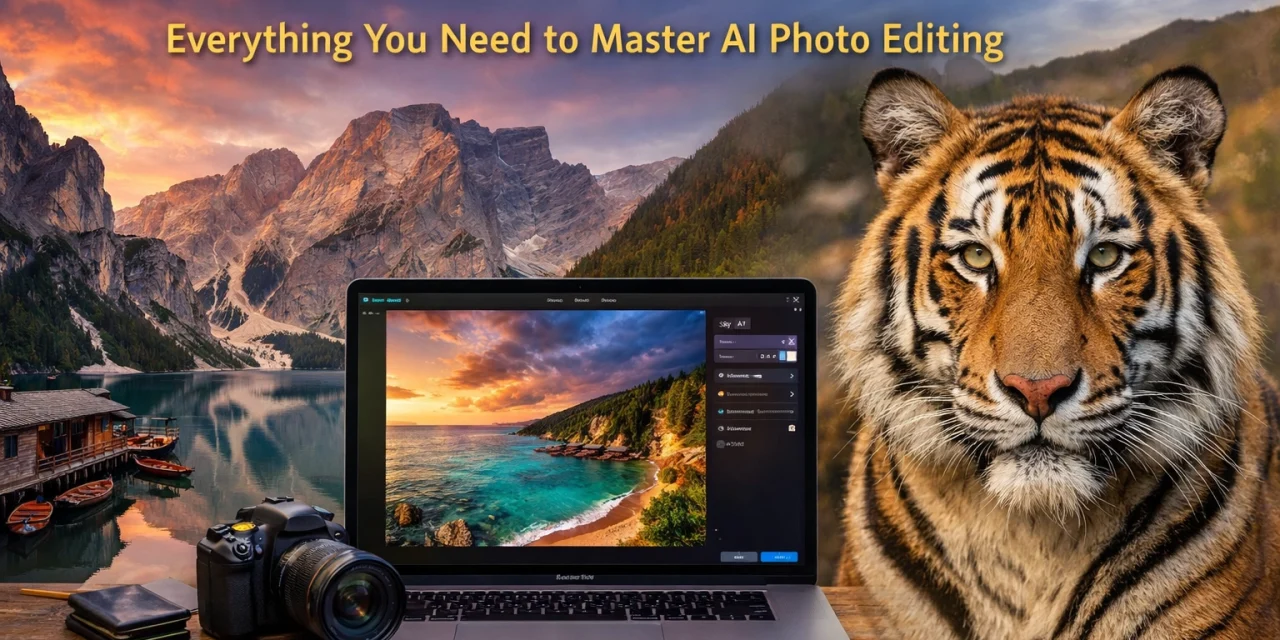
Over the last year, Skylum has turned Luminar Neo into more than just a filter app; it is now a powerhouse of artificial intelligence designed to handle the heavy lifting of photo editing. Whether you’re a seasoned pro or just starting out with your essential photography gear, this guide will walk you through everything you need to master this tool.
What is Luminar Neo?
Luminar Neo is an AI-driven photo editor that works as both a standalone application and a plugin for Adobe Lightroom and Photoshop. Its philosophy is simple: use AI to automate the tedious parts of editing so you can focus on the creative vision.
If you haven't tried it yet, you can grab Luminar Neo here to follow along with this guide.
The beauty of Neo lies in its "Extensions" and "AI Tools." Unlike traditional sliders that just move pixels around, these tools "see" your image. They recognize skies, people, mountains, and even power lines.
Relight AI: Mastering Depth
One of the most impressive tools in the Neo arsenal is Relight AI. Traditional exposure sliders affect the whole image or rely on manual gradients. Relight AI calculates a 3D map of your photo to distinguish between the foreground and background.
Imagine you’ve taken a stunning landscape shot at one of Miami's hidden speakeasies or a dark interior. Usually, if you brighten the subject, the background blows out. With Relight AI, you can independently adjust the brightness and warmth of the near and far zones. It’s like being able to walk back into the scene with a giant reflector and a softbox.

SEO Alt Text: A side-by-side comparison of a landscape photo showing the Relight AI tool in Luminar Neo adjusting foreground brightness without affecting the sky's exposure.
The Magic of Sky AI
We’ve all been there: the composition is perfect, but the sky is a flat, featureless gray. Sky AI was the feature that put Skylum on the map, and in Neo, it’s better than ever. It doesn't just "cut and paste" a new sky; it relights the entire scene to match the new light source.
If you’re shooting for my fine art collection, you know that light is everything. Sky AI handles reflections in water and even wraps light around fine details like tree branches. For those who want more variety, you can even download custom sky overlays to keep your portfolio looking unique.
Generative AI: GenErase and Generative Expand
This is where the future really begins. We’ve all had a perfect shot ruined by a stray tourist, a trash can, or a distracting power line.
- GenErase: This isn't just a clone stamp. It uses AI to fill in the gaps with textures that actually belong there. If you erase a person standing on a beach, it fills it with realistic sand and water ripples based on the surrounding pixels.
- Generative Expand: Ever shot a vertical photo that you wish was horizontal for a website header? Generative Expand allows you to "pull" the edges of your photo, and the AI generates new content to fill the frame.

SEO Alt Text: A demonstration of the GenErase tool in Luminar Neo removing a distracting power line from a clear blue sky with perfect texture replacement.
Portrait AI: Your Digital Retoucher
If you do a lot of people photography, perhaps as an Atlanta event photographer, you know that retouching skin and eyes can take forever.
Luminar Neo’s Portrait AI tools are subtle and reassuring. Face AI can enhance eyes and lips, while Skin AI removes blemishes without making the subject look like a plastic doll. The Body AI and Portrait Bokeh AI tools allow you to create a shallow depth of field even if you didn't have a fast prime lens on your camera at the time.
Streamlining the Workflow: The Develop Tool
While the AI features get all the hype, the Develop Tool is the heart of the software. It’s where you handle your RAW processing, exposure, and color temperature. It’s clean, intuitive, and much faster than scrolling through the endless sidebars of other software.
For those looking to dive deeper into the technical side of things, our educational category has plenty of resources on how to nail exposure in-camera before you even get to the editing stage.

SEO Alt Text: The Luminar Neo interface showing the Develop Tool module with sliders for exposure, contrast, and color temperature on a RAW image.
Why Choose Luminar Neo Over Others?
You might be asking, "Why shouldn't I just stick to Lightroom?" It’s a fair question. At Edin Chavez’s blog, we often discuss the importance of using the right tool for the job.
- Speed: Tasks that take 20 minutes in Photoshop (like masking a complex skyline) take 20 seconds in Neo.
- No Subscription Fatigue: While they offer subscriptions, you can still get a lifetime license for Luminar Neo, which is a breath of fresh air in today's software market.
- Ease of Use: The learning curve is almost non-existent. You don't need a degree in graphic design to make a photo look professional.
Cleaning Up the Mess: Dust Spots and Power Lines
Nothing kills a vibe like sensor dust. If you’ve been swapping lenses while traveling, maybe on a trip to check out the best breweries in Williamsburg, you're bound to get some dust on your sensor.
Neo has a "one-click" solution for this. The Remove Dust Spots and Remove Power Lines tools are absolute lifesavers. They scan the image and automatically zap those distractions into oblivion. It’s satisfying to watch and saves a massive amount of "click-and-heal" time.

SEO Alt Text: Before and after comparison of a city landscape where Luminar Neo's Remove Power Lines tool has automatically cleared the sky of wires.
Using Luminar Neo as a Plugin
You don't have to give up your current workflow. I personally use Luminar Neo as a plugin for my more artistic edits. I’ll do my basic organization and color correction in Lightroom, then "round-trip" the photo into Neo to use Structure AI or Supersharp AI.
Supersharp AI is particularly impressive for saving photos that have a bit of motion blur or missed focus. It’s not magic, you still need to take good photos, but it can certainly save a "near-miss" from a once-in-a-lifetime trip.
Final Thoughts: Is It Right For You?
If you want to spend less time in front of a monitor and more time exploring restaurants in downtown Golden or shooting the sunrise, then yes, Luminar Neo is worth every penny. It’s a reassuring tool that helps you achieve your vision without the technical frustration.
Photography should be about the joy of capturing a moment, not the stress of fixing it. Luminar Neo bridges that gap perfectly.
Ready to transform your editing? Check out Luminar Neo here and start experimenting with these AI tools today.

SEO Alt Text: A photographer using a laptop in a casual cafe setting, showing a vibrant landscape being edited in Luminar Neo.
For more reviews on the latest tech, head over to our camera reviews 2024 section or check out our full category of reviews to see how Neo stacks up against the competition. Happy shooting!













