
Category: Foodies
Welcome to day four of our 14-day deep dive into the culinary soul of Tokyo. So far, we’ve tackled the neon-soaked maid cafes of Akihabara and the high-stakes sushi counters of Ginza, but tonight? Tonight, we’re heading into the belly of the beast. We’re going to Shinjuku.
If Shinjuku Station: the busiest train station in the world: is the heart of Tokyo, then the Izakayas are its lifeblood. But let’s be real: Shinjuku is intimidating. It’s a labyrinth of neon, towering skyscrapers, and underground tunnels that feel like they were designed by someone who really liked Blade Runner but hated maps.
Finding a place to eat is easy. Finding the right place: the kind of hidden, smoky, local haunt where the highballs are cold and the yakitori is life-changing: that takes a bit of a roadmap. Don’t worry, I’ve got you.
What Exactly is an Izakaya?
Before we dive into the alleys, let’s clear the air. An Izakaya isn’t just a bar, and it isn’t just a restaurant. It’s a "stay-drink-place." Think of it as a Japanese gastropub where the food is designed to make the drinks taste better, and the drinks are designed to make the conversation flow faster.
In Shinjuku, these range from massive, multi-story chains to tiny holes-in-the-wall that can barely fit four people and a grill. We’re here for the latter.

The Big Three: Where to Lose Yourself (and Find Great Food)
To succeed in Shinjuku, you need to know which "pocket" of the district fits your vibe. Here are the three heavy hitters.
1. Omoide Yokocho (Memory Lane)
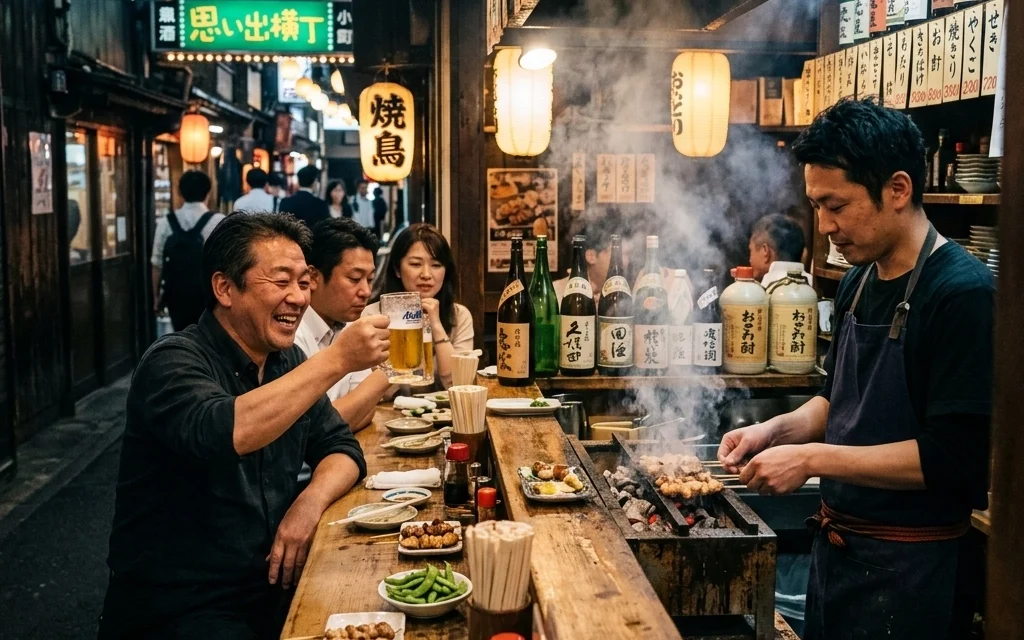
Commonly known by its less-than-appetizing nickname, "Piss Alley," this is the Shinjuku you see in your dreams. Located just outside the West Exit of the station, it’s a tiny network of alleys filled with about 80 miniature bars and yakitori stalls.
The smell hits you first: charcoal, soy sauce, and rendered chicken fat. It’s glorious. Most of these shops are counter-seating only. You’ll be elbow-to-elbow with a salaryman who just finished a 12-hour shift and a couple of locals who have been coming to the same stool since 1975.
Pro Tip: Look for the tempura udon shop at the corner. It’s a local legend for a reason. If you’re worried about the language barrier, many places here have picture menus now, but a simple "Osusume" (recommendation) usually gets you the best skewers of the night.
2. Golden Gai
If Omoide Yokocho is for eating, Golden Gai is for the atmosphere. This area in Kabukicho is a collection of six narrow alleys packed with over 200 tiny bars. Most of these buildings are no wider than a compact car.
Each bar has its own theme: jazz, punk rock, vintage movies, or even hospital-themed. While some are "members only," many welcome tourists. Just look for the signs in English or a friendly face at the door. It’s the perfect place to grab a drink after you’ve filled up on yakitori elsewhere.
3. Shinjuku Sanchome
If the chaos of the alleys feels like a bit much, head over to Shinjuku Sanchome. It’s a bit more "refined" but still carries that authentic Tokyo energy. This area is unique because it’s one of the few places in the city where you’ll find street-style seating and izakayas that spill out onto the sidewalk. It’s a fantastic spot for people-watching with a draft beer in hand.

The "New" Hidden Gem: HOBO Shinjuku Noren Street
If you want the "hidden" vibe without the "I might get lost forever" anxiety, check out HOBO Shinjuku Noren Street. This is a relatively new development that took a bunch of old, traditional houses and converted them into a concentrated street of izakayas.
It’s got a great mix of old-school charm and modern convenience. There’s a fantastic eel-focused izakaya there that serves grilled chicken and appetizers that will make you rethink everything you know about Japanese pub food. It’s a bit quieter than the main Shinjuku drag, making it a great "intro" to the scene.
How to Succeed: Izakaya Etiquette 101
Walking into a tiny Japanese bar can be nerve-wracking. Here is how you handle it like a pro:
- The Otoshi: Almost every izakaya will serve you a tiny dish (like potato salad or pickled veggies) as soon as you sit down. This is the Otoshi, a mandatory appetizer that acts as a seating charge. Don’t try to send it back; just enjoy it.
- The "Sumimasen!": Don’t wait for the server to come to you. In a busy izakaya, you have to be proactive. Raise a hand and shout "Sumimasen!" (Excuse me!) to get their attention.
- Order in Waves: Don't order everything at once. Part of the fun is ordering two or three things, seeing how they are, and then ordering more.
- The Drink First Rule: Order your drinks immediately. "Nama biiru" (draft beer) is the universal starting point.

A Note for the Photographers
Being a part of the Photoguides family, I know you’re probably itching to pull out your camera. Shinjuku at night is a playground for light and shadow. The steam rising from the yakitori grills against the glow of red lanterns (chochin) is a classic shot.
However, be respectful. These are tiny spaces. If you’re carrying a massive DSLR and three lenses, you’re going to be a "space invader." I usually recommend a small, prime lens (like a 35mm or 50mm) for these environments. If you’re looking to upgrade your travel kit before your next trip, check out our essential photography gear guide or dive into some camera reviews to see what’s performing best in low light.
For more technical tips on shooting in neon-heavy environments, I’ve shared some deep dives over at Shut Your Aperture that will help you nail those "Blade Runner" colors without blowing out your highlights.

Don’t Do It Alone: Book a Food Tour
I’ll be honest: even for a seasoned traveler, Shinjuku’s hidden gems can stay too hidden. If you want to skip the "where do I go?" stress and get straight to the "this is the best food I've ever had" part, I highly recommend booking a guided food tour.
Having a local guide take you through the neon-lit alleys of Kabukicho and into the backstreets of Shinjuku is a game-changer. They know which stalls have the freshest ingredients and which bars are truly welcoming to outsiders.
I recommend booking a Shinjuku Izakaya tour through Viator here: Book Your Tokyo Food Tour
A good tour usually includes a dozen tastings and a few drinks, which is a steal considering how much you'd spend trying to figure it out on your own. Plus, it’s a great way to meet other travelers who are just as hungry as you are.
Wrapping Up Night Four
Shinjuku is a place of beautiful contradictions. It’s loud, crowded, and overwhelming, yet inside a tiny ten-seat izakaya, it can be the most peaceful and welcoming place in the world. It’s all about taking that first step into the alley.
If you’re planning your trip and looking for more inspiration beyond the dinner table, maybe check out some cheap weekend getaways or read up on our photography booking experiences to make sure you capture your memories perfectly. You can even see some of my high-end prints of Tokyo nights over at Edin Fine Art if you want to see what these alleys look like through a professional lens.
Stay tuned for tomorrow, where we’re heading to the colorful streets of Harajuku to see if the street food is as wild as the fashion. (Spoiler: it is.)
For more travel tips and photography insights, keep an eye on my personal blog. Until then: Kanpai!














