Category: Foodies
Welcome to day four of our 14-day Tokyo food marathon! If you’ve survived the neon-soaked themed cafes of Akihabara and the high-end, "don't-breathe-too-loud" sushi counters of Ginza, congratulations. You’re ready for the big leagues. Today, we’re heading to the holy grail of seafood: the Tsukiji Outer Market.
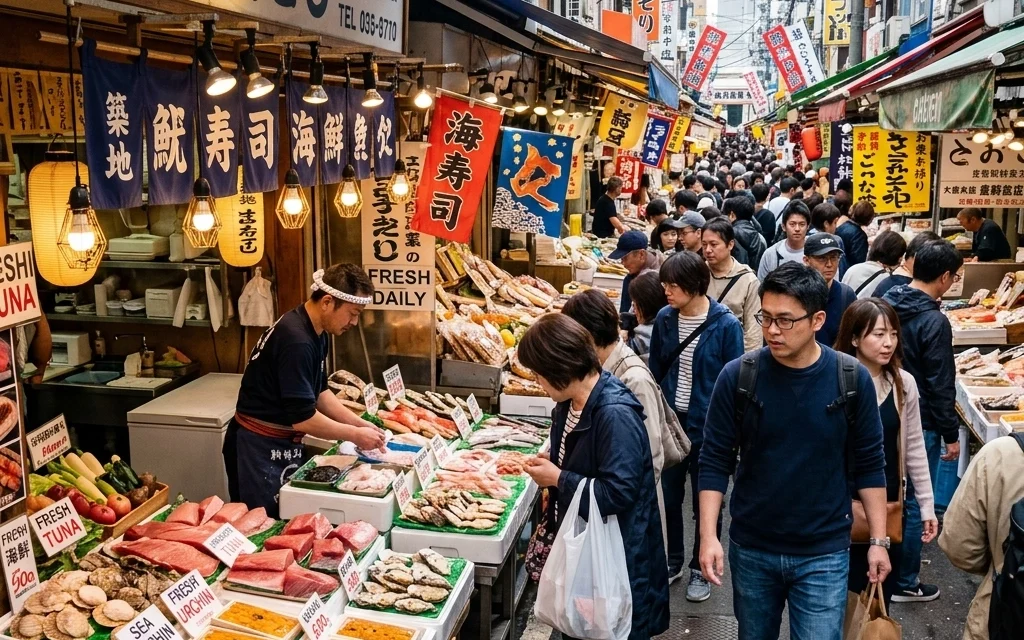
Now, before we dive into the delicious chaos, let’s clear up the biggest rumor in the travel world. You might have heard that Tsukiji "closed" back in 2018. While the inner wholesale market (where the famous tuna auctions happen) moved to a shiny new facility in Toyosu, the Tsukiji Outer Market is very much alive, kicking, and smelling faintly of saltwater and success. It remains the heart and soul of Tokyo’s food scene, packed with over 400 stalls, restaurants, and shops that have been there for generations.
Whether you’re a photographer looking for that perfect shot of a glistening tuna belly or a foodie who wants to eat their weight in sea urchin, this guide is your roadmap to success.
1. Timing is Everything (and Coffee is Mandatory)
If you’re planning on showing up at noon to casually stroll through the market, I have some bad news for you: most of the best stuff will be gone, and you’ll be fighting for sidewalk space with five thousand other people.
To really "succeed" at Tsukiji, you need to arrive by 8:00 AM or 8:30 AM. This is the sweet spot where the shops are fully set up, the seafood is at its peak freshness, and the crushing midday crowds haven't quite peaked yet. Most stalls start winding down by 1:00 PM, and by 2:00 PM, the shutters are coming down.

Pro tip: If you’re a photographer, that early morning light filtering through the narrow alleys is pure gold. For more tips on capturing the vibe of a busy market without getting run over by a turret truck, check out our guide on essential photography gear or dive into more technical advice over at Shut Your Aperture.
2. The Must-Eat List
Tsukiji isn't just a place; it's a sensory overload. You’re going to be hit with the smell of grilled scallops, the sight of giant wasabi roots, and the sound of vendors shouting their daily specials. Here is what you absolutely cannot miss:
Tamagoyaki (Japanese Omelet)
This is the quintessential Tsukiji snack. You’ll see several stalls where masters are flipping rectangular omelets with incredible speed. For about 100-150 yen, you get a warm, sweet, and savory slice on a stick. It’s the perfect appetizer for a morning of gluttony.
Maguro (Tuna) Everything
You are at the world's most famous fish market: eat the tuna. Look for Otoro (the fattiest part of the belly). It literally melts on your tongue like butter. If you want the full experience, grab a Kaisendon (seafood rice bowl) from one of the small shops tucked into the side streets.
Grilled Scallops with Uni
This is the "Instagram famous" dish, but it actually lives up to the hype. Vendors will grill a giant scallop in its shell, top it with a generous dollop of uni (sea urchin), and torch it until it’s bubbly and charred. It’s decadent, messy, and worth every yen.
Strawberry Mochi
To cleanse the palate, grab a strawberry daifuku. These are giant, juicy strawberries wrapped in sweet bean paste and soft, chewy mochi. They look like little pieces of art, which is right up our alley at Photoguides.

3. Don't Get Lost (Unless You Want To)
Navigating Tsukiji is like trying to solve a Rubik’s Cube while people are pushing past you with boxes of crab. The layout is a grid of narrow lanes and hidden courtyards. While getting lost is part of the fun, it can also be overwhelming if you’re hungry and looking for a specific stall.
If you want to skip the "where the heck am I?" phase and go straight to the "this is the best thing I've ever eaten" phase, I highly recommend booking a local guide. They know the vendors, the history, and most importantly, the hidden spots that don't have a two-hour wait. You can book a highly-rated food tour through Viator right here to ensure you’re hitting the real-deal spots and not just the tourist traps.
4. Photography Etiquette: How Not to Be "That Guy"
As photographers, we love the grit and texture of Tsukiji. But remember, this is a place of business. These vendors are working hard, and a giant lens in their face can be a bit much.
- Ask before you snap: A simple "Sumimasen" (excuse me) and a point at your camera goes a long way.
- Don't block the flow: The alleys are narrow. If you stop to set up a tripod, you’re going to have a bad time (and likely get yelled at). Keep it handheld and move quickly.
- Buy something first: If you spend five minutes taking photos of a vendor's beautiful oysters, the least you can do is buy one. It’s good karma and great for your taste buds.
For more inspiration on capturing travel moments that look like they belong in a gallery, take a look at Edin’s Fine Art to see how the pros frame urban chaos.

5. Beyond the Food: Shopping for Souvenirs
Once you’re sufficiently stuffed with raw fish, it’s time to look at the non-perishables. Tsukiji is one of the best places in Japan to buy professional-grade kitchen equipment.
- Knives: You’ll find legendary shops like Aritsugu and Masamoto. These knives are hand-forged and can last a lifetime. Just remember: you cannot put these in your carry-on!
- Ceramics: There are several shops selling beautiful, hand-painted bowls, plates, and sake sets for much cheaper than you’ll find in the department stores of Shinjuku.
- Dried Goods: Pick up some high-quality kombu (kelp) or katsuobushi (bonito flakes) to take the flavors of Tokyo home with you.
6. Practical Tips for a Smooth Visit
To make sure your morning is more "culinary dream" and less "logistical nightmare," keep these things in mind:
- Cash is King: While some of the larger restaurants take cards, many of the small street food stalls are cash-only. Bring plenty of yen.
- Wear Closed-Toe Shoes: The ground can be wet and messy. This is not the place for your fancy suede loafers or flip-flops.
- No Eating While Walking: In Japan, it’s generally considered rude to eat while walking. Most stalls will have a small area for you to stand and eat your food before moving on.
- The "Secret" Rooftop: Check out the Tsukiji Terrace for a great view of the market from above. It’s a fantastic spot for a panoramic shot.

Why Tsukiji Matters
In a city that is constantly reinventing itself, Tsukiji Outer Market feels like a tether to the past. It’s a place where tradition meets tourism in a surprisingly functional way. Whether you are following our photography booking experience or just wandering on your own, the market offers a grit and authenticity that you won't find in a shopping mall.
If you’re looking for more travel inspiration or perhaps a bit of a break from the Tokyo hustle, you might enjoy our look at cheap weekend getaways or even Edin’s personal travel stories over at Edin Chavez’s Blog.
Final Thoughts
Succeeding as a foodie at Tsukiji is all about curiosity and a willingness to try things that look slightly intimidating. That grey, spiky thing? It’s probably delicious. That line that looks too long? It’s probably worth it.
Don't forget, if you want the absolute best experience without the stress of navigating the maze yourself, booking a food tour through Viator is the way to go. They’ll show you the ropes, fill your stomach, and give you the confidence to explore even deeper on your next visit.
Now go forth, get your camera ready, and eat some tuna. You’ve earned it! Check back tomorrow for Day 5, where we take our appetites to the neon streets of Shinjuku for some late-night ramen.
Safe travels and happy shooting!