
Category: Photo Guides
If you’ve ever stood on the edge of a boardwalk in the Florida Everglades at sunrise, you know the feeling. The air is thick and sweet, the sawgrass is glowing orange, and the only sound is the distant, prehistoric grunt of an alligator or the rhythmic flap of a Great Blue Heron’s wings. It is a photographer's paradise, but it can also be incredibly overwhelming.
The Everglades is a massive, complex ecosystem. It doesn’t give up its secrets easily to those who just show up with a camera and hope for the best. That is where wildlife photography tours come in. Whether you are a seasoned pro or just picking up your first mirrorless camera, a guided experience can be the difference between a memory card full of "okay" snapshots and a portfolio of world-class images.
In this guide, I’m going to walk you through everything you need to know about photography tours in the Everglades: from why they are worth the investment to the specific gear you’ll need to bring home those "National Geographic" shots. And if you really want to skip the learning curve, make sure to check out our Everglades Photography Guide for the ultimate roadmap to success.
Why a Photography Tour Changes the Game
You might be thinking, "I have a GPS and a long lens, why do I need a guide?" It’s a fair question. But the Everglades isn't like a zoo where animals are on a schedule. Wildlife here moves with the water levels, the tides, and the seasons.
Local Expertise and Wildlife Patterns
A professional guide doesn't just know where the animals are today; they know where they are likely to be at 6:45 AM when the light hits a specific cypress head. They understand nesting cycles and feeding patterns. They can hear a bird call from a quarter-mile away and tell you exactly which species is about to fly into your frame. This kind of "field craft" takes years to master, and on a tour, you are essentially downloading that knowledge into your own workflow.
Access to Remote Areas
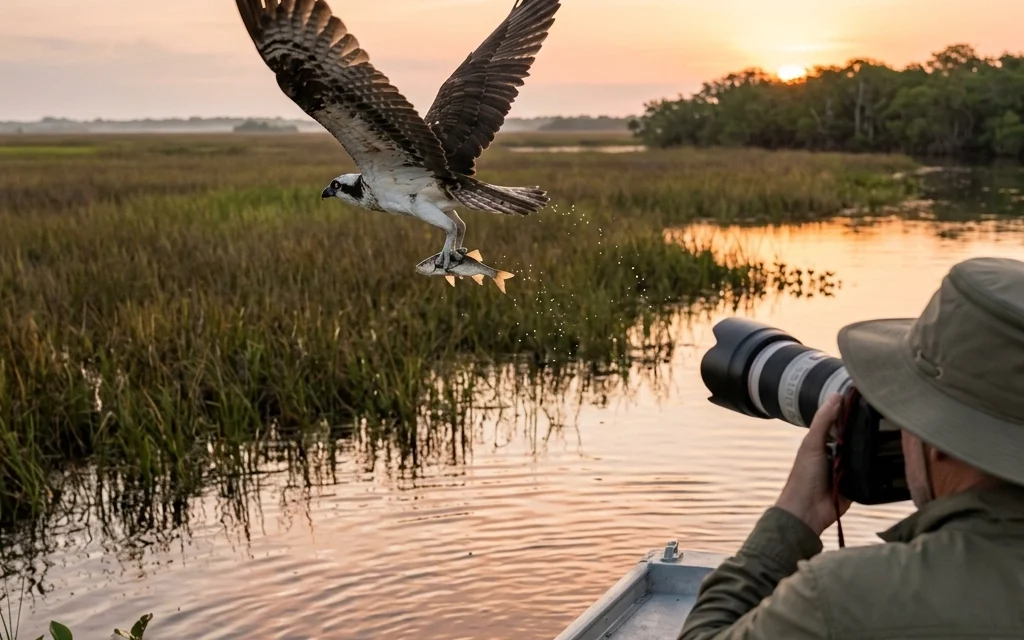
Many of the best shots in the Everglades aren't accessible by car. While the boardwalks are great, some of the most dramatic "fly-offs": where thousands of birds take flight at once: happen deep in the Ten Thousand Islands or along remote mangrove shorelines. Specialized photography boats with flat decks and silent electric motors allow you to get eye-level with wildlife without disturbing them.

Choosing the Right Tour for Your Style
Not all tours are created equal. Depending on your budget and what you want to achieve, you generally have two main options:
1. Private Photography Safaris
This is the gold standard. A private tour usually accommodates one to three photographers, meaning the entire itinerary is built around your needs. If you want to spend three hours waiting for an Osprey to dive, you can. You aren't competing with ten other people for the best angle on the boat. While these can cost around $500 for a half-day, the return on investment in terms of keepers is unmatched.
2. Group Photo Walks
If you are looking for something more social or budget-friendly, group walks (often around $200-$250) are a fantastic option. These usually take place in accessible but high-yield areas like the Anhinga Trail or Shark Valley. They are excellent for learning the basics of bird behavior and getting comfortable with your settings in a supportive environment.
For more insights into how these experiences are structured, you can read more about the photography booking experience to see what fits your rhythm.
Top Photography Locations in the Everglades
While a guide will take you to their "secret spots," there are several iconic locations that every wildlife photographer should have on their radar.
The Anhinga Trail (Royal Palm)
This is arguably the most famous photography spot in the park. It’s a boardwalk that puts you right on top of the action. You’ll find anhingas, herons, egrets, and alligators often just feet away from the railing. The early morning light here is legendary, casting a soft, golden glow over the water.
Shark Valley
If you want to photograph alligators in their most natural state, Shark Valley is the place. A 15-mile loop trail takes you deep into the "River of Grass." It’s a great spot for wide-angle wildlife shots that show the animal in the context of the vast landscape.
Flamingo and the Coast
At the southernmost tip of the park lies Flamingo. This is the gateway to Florida Bay and the best place to find Roseate Spoonbills and American Crocodiles. The lighting here is different: hazy, salty, and incredibly atmospheric.

Gear: What to Pack for the Glades
The Everglades can be harsh on equipment. You’re dealing with humidity, salt spray, and sometimes unpredictable weather.
- The Long Lens: A lens in the 400mm to 600mm range is standard for bird photography. If you are shooting mirrorless, the newer 100-500mm or 180-600mm zooms are perfect for the Everglades because they allow you to reframe quickly when a bird suddenly flies closer.
- Support: A sturdy tripod with a gimbal head is a lifesaver for long days on a boat or boardwalk. However, if you are on a small boat, a monopod or even hand-holding might be more practical.
- Protection: Bring a rain cover for your camera and plenty of lens cloths. If you are looking to upgrade before your trip, check out our camera reviews 2024 for the best weather-sealed options.
- Essential Clothing: Long sleeves (UPF rated), a wide-brimmed hat, and polarized sunglasses are non-negotiable.
For a deeper dive into the technical side of things, our list of essential photography gear will help ensure you don't leave anything critical behind.
The Secret to Success: Timing and Light
In the Everglades, timing is everything. Most tours will start well before sunrise. Why? Because the "Golden Hour" in Florida is fleeting. Once the sun gets high, the contrast becomes harsh, and the wildlife tends to hunker down in the shade to escape the heat.
Winter (November to April) is the prime season. The water levels drop, forcing the fish and birds into concentrated pools. This creates a "buffet" for predators and incredible "target-rich" environments for photographers. It’s also when the mosquitoes are at their most tolerable!
If you can’t make it in the winter, don’t worry. The summer months offer dramatic afternoon thunderstorms and incredible cloud formations that are perfect for landscape enthusiasts. You can even experiment with sky overlays later to enhance those moody summer shots.
Elevate Your Skills with the Everglades Photography Guide
While a tour gives you the "where" and "when," our Everglades Photography Guide gives you the "how." It is designed to complement your field experience by providing specific settings, compositions, and post-processing tips tailored specifically to this unique environment.
I’ve spent years navigating these waters and marshes, and I’ve put all that knowledge into a single resource. It covers everything from how to expose for a white egret in bright sun to the best ways to capture the power of an alligator's strike.

Final Thoughts
Wildlife photography is more than just a hobby; it’s a way to connect with the natural world. In the Everglades, that connection feels visceral. When you’re looking through the viewfinder at a rare Snail Kite or watching the mist rise off the water, the rest of the world fades away.
Tours make this experience accessible and successful. They take the guesswork out of the equation so you can focus on what matters: the art of the shot. For more inspiration and to see the kind of work possible in this region, feel free to browse my fine art gallery or join the conversation over at Shut Your Aperture.
Ready to head out? Grab your gear, book a guide, and don't forget to pack your patience. The Everglades is waiting to show you something incredible. For more tips on photography and travel, keep an eye on Photoguides, where we are constantly updating our resources to help you become the best photographer you can be.













