Category: Foodies
Let’s be honest: most of us plan our travels around landmarks. We want to see the Eiffel Tower, the Colosseum, or the Statue of Liberty. We look for those big, shiny pins on Google Maps and build our itineraries around them. But what if I told you that you’ve been doing it backward?
After spending some time wandering the neon-soaked streets of Tokyo, I realized something revolutionary. If you want to find the soul of a city: the real, unfiltered, "I-can’t-believe-this-is-real" spots: you don’t look for the monuments. You look for the menus.
Tokyo isn't just a city; it’s a giant, delicious puzzle where food is the only piece that matters. It’s a place where the pursuit of the perfect bowl of ramen or a slice of melt-in-your-mouth Otoro will lead you into the most photogenic, hidden corners of the world. At Photoguides, we’re all about capturing the world’s beauty, and in Tokyo, that beauty is usually served on a ceramic plate.
Over the next 14 days, we’re diving deep into the Tokyo food scene. This isn't just a guide on where to eat; it’s a lesson in how to let your stomach lead you to the best travel locations you’ve ever seen.
The Ginza Precision: High-End Sushi and Hidden Alleys
If you want to understand why Tokyo changes your travel perspective, start in Ginza. This is the land of high fashion, luxury boutiques, and sushi so pristine it belongs in a museum. But here’s the secret: some of the world’s best sushi isn't in a flashy skyscraper. It’s tucked away in the basement of a nondescript office building or down a narrow alleyway that looks like a dead end.
When you’re hunting for high-end sushi in Ginza, you aren't just looking for food; you’re looking for craftsmanship. Watching a master chef slice fish is like watching a painter at work: it’s the ultimate photography subject. If you’re planning to document your meal, make sure you check out our guide on essential photography gear to ensure you have the right lens for those close-up shots of marbled Wagyu and glistening tuna.
The hunt for these spots forces you to slow down. You notice the texture of the wooden doors, the way the light hits the Noren (curtains), and the quiet dignity of a neighborhood that refuses to be rushed.
Pro Tip: Finding these spots can be like finding a needle in a haystack. To skip the frustration and get straight to the "Oishi" (delicious) moments, book a high-end food tour through Viator here.

Akihabara: Where "Themed" Is a Lifestyle
Next, we move to the electric heart of Akihabara. Known globally as the "Electric Town," it’s the epicenter of anime, gaming, and some of the most bizarrely creative themed cafes on the planet.
In most cities, a "themed cafe" is a tourist trap. In Tokyo, it’s a cultural immersion. From Maid Cafes to Owl Cafes and everything in between, these locations challenge your photography skills with vibrant colors and chaotic lighting. Akihabara teaches you that a travel location doesn’t have to be "pretty" in the traditional sense to be spectacular. It just needs character.
While you're there, you’ll find yourself wandering into multi-story electronics buildings and retro gaming dens you’d never have stepped into if you weren't looking for that one specific Final Fantasy-themed latte. It’s a riot for the senses.
To really navigate the madness of the backstreets and find the cafes that are actually worth your time, check out these Akihabara food and culture tours on Viator.
The Tsukiji Outer Market: The Gastronomic Heart
Even though the inner wholesale market moved to Toyosu, the Tsukiji Outer Market remains a legendary pilgrimage site for foodies. This is where the energy of Tokyo is most palpable. It’s loud, it’s crowded, and it smells like the freshest ocean air you’ve ever breathed.
Starting your day at 7:00 AM with a bowl of Chirashi-don (scattered sushi) will change how you view breakfast forever. But more importantly, it changes how you find locations. At Tsukiji, the "best spot" is often a tiny stall with three stools and a line of locals. By following the food, you end up in the middle of a historic district that still feels like Old Tokyo.
For the photographers out there, the morning light hitting the steam from giant pots of tamagoyaki (rolled omelet) is pure gold. For more tips on how to book these kinds of visual experiences, visit our photography booking experience page.
To make sure you’re hitting the stalls that the locals keep secret, book a Tsukiji market tour via Viator here. Trust me, having a guide to explain what that mysterious grilled tentacle is makes the experience much better.

Harajuku: Street Food as Art
Harajuku is famous for its "Kawaii" (cute) culture, but if you go there just to see the outfits on Takeshita Street, you’re missing the point. The real Harajuku is found in the street food. We’re talking about giant rainbow cotton candy, decadent crepes filled with cheesecake, and the iconic "long potatoes."
Harajuku teaches you that travel locations can be playful. When you’re chasing the latest food trend, you find yourself wandering into the backstreets of Ura-Harajuku, where the cool kids hang out and the street art is world-class. It’s a visual feast that demands a high-quality camera. If you're looking to upgrade before your trip, take a look at the latest camera reviews for 2024 on our site.
The colors here are so vibrant they almost look fake. It’s the perfect place to practice your street photography while holding a crepe in one hand. If you want to find the most "Instagrammable" snacks without getting lost in the throngs of tourists, book a Harajuku street food tour on Viator.

Why Food Leads to Better Photos
At Photoguides, we believe the best photos tell a story. When you travel based on landmarks, your photos look like everyone else’s. But when you travel based on food, your photos are personal. They have steam, they have texture, and they have the smiling face of the chef who has been making the same noodle recipe for 40 years.
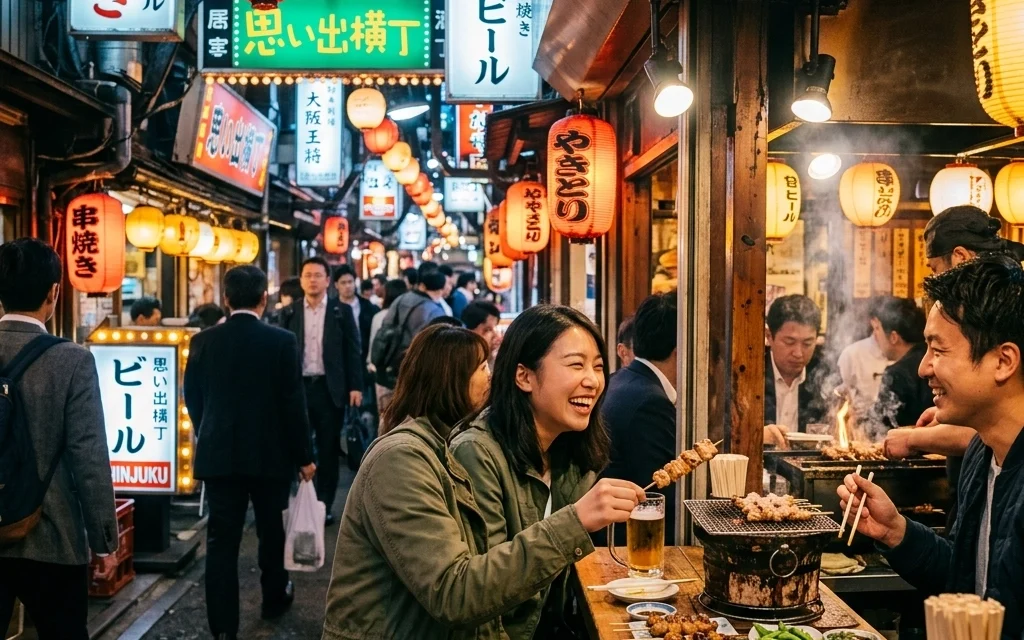
Following the scent of yakitori leads you under train tracks (the famous "Girders" of Yurakucho), where the atmosphere is gritty, smoky, and absolutely cinematic. You won't find these spots on a "Top 10 Monuments" list, but you will find them on a food tour.
If you want to see how this kind of travel photography translates into fine art, take a look at Edin Chavez’s fine art collection. His work often captures the essence of a place by looking at the details others miss: much like finding a hidden ramen shop in a Shinjuku alleyway.
The "Food-First" Philosophy
So, how do you apply this to your next trip?
- Ditch the Main Road: If a restaurant has a menu in five languages with pictures of the food on a giant board outside, keep walking.
- Look for the Line: In Tokyo, a line (especially one filled with salarymen) is a beacon of quality.
- Use Food as Your Compass: Pick a specific dish you want to try, find the best place for it, and then explore everything within a five-block radius of that restaurant.
By using food as your guide, you’ll discover neighborhoods you never knew existed. You’ll find the quiet shrines tucked between skyscrapers and the small galleries that don’t make the guidebooks.
If you’re just starting out and need some help editing those delicious food shots to look their best, you can download our sky overlays or other editing tools to give your travel photos that professional pop. And for more technical advice, don't forget to visit Shut Your Aperture for gear talk and community tips.

What’s Next?
This is just Day 1 of our 14-day Tokyo flavor fest. Over the next two weeks, we’ll be breaking down exactly where to go, what to order, and how to photograph it all. We’ll look at the best restaurants near Deer Park (wait, that's Nara, but we'll get there!) and even compare global food scenes like the Dominican Republic vs Cancun for those who prefer tacos to tempura.
Tokyo's food scene is a masterclass in discovery. It challenges you to be curious, to be brave (raw horse meat, anyone?), and to look past the surface of a city. For more travel inspiration and photography deep-dives, keep an eye on Edin Chavez’s blog.
Are you ready to stop being a tourist and start being a culinary explorer? The best travel locations in the world aren't on a map: they're on a plate.
Before you head out, make sure your logistics are handled. There’s nothing worse than being hangry in a foreign city. Secure your spot on a curated Tokyo food tour via Viator and let the experts show you the way.
Stay hungry, keep shooting, and I’ll see you tomorrow for Day 2!