If you’re a photographer visiting Japan in 2026, you probably have a list of the usual suspects: the neon lights of Shinjuku, the quiet temples of Kyoto, and maybe a sunrise at Mount Fuji. But if you want to capture something that screams "scale," "speed," and "vibrant chaos," you need to hop on a train to Mie Prefecture.
Welcome to Nagashima Spa Land. It’s often called the "Spaanish" equivalent of a major US theme park, but with a distinctly Japanese flavor: and some of the most photogenic roller coasters on the planet. Whether you’re here for the white-knuckle drops or the 8.5 million LED lights at the neighboring Nabana no Sato, this is one of the best photography locations in the country.
In this guide, I’m going to walk you through how to nail the perfect shots of the world-famous Steel Dragon 2000, how to survive the splash zones, and where to find the best photo spots for that perfect sunset silhouette.
The Titans of Track: Steel Dragon and Hakugei
Let’s talk about the stars of the show. If you’re coming here for photography, you’re likely coming for the steel and wood.
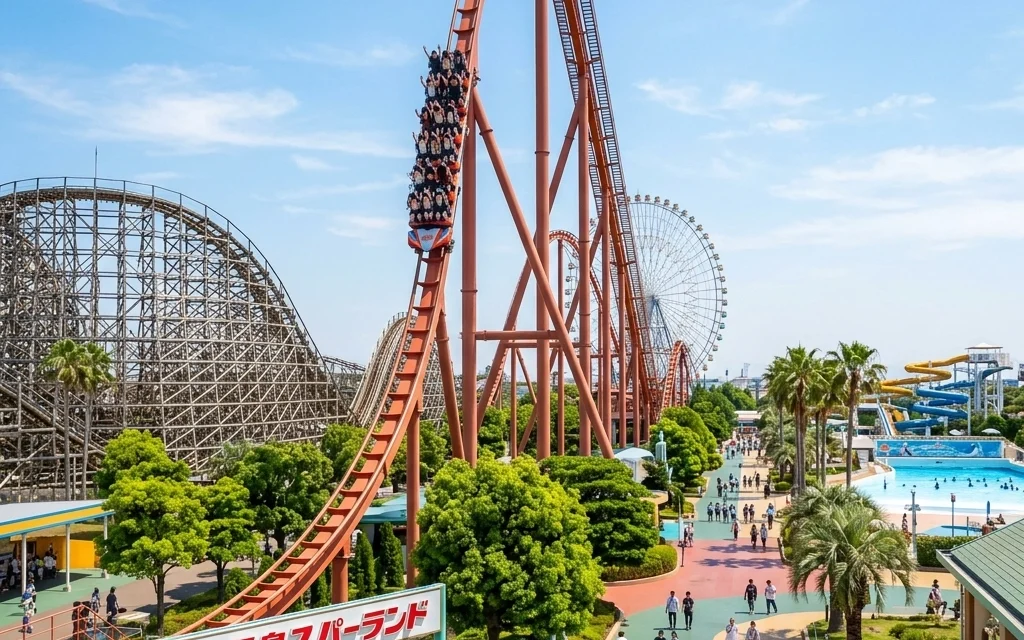
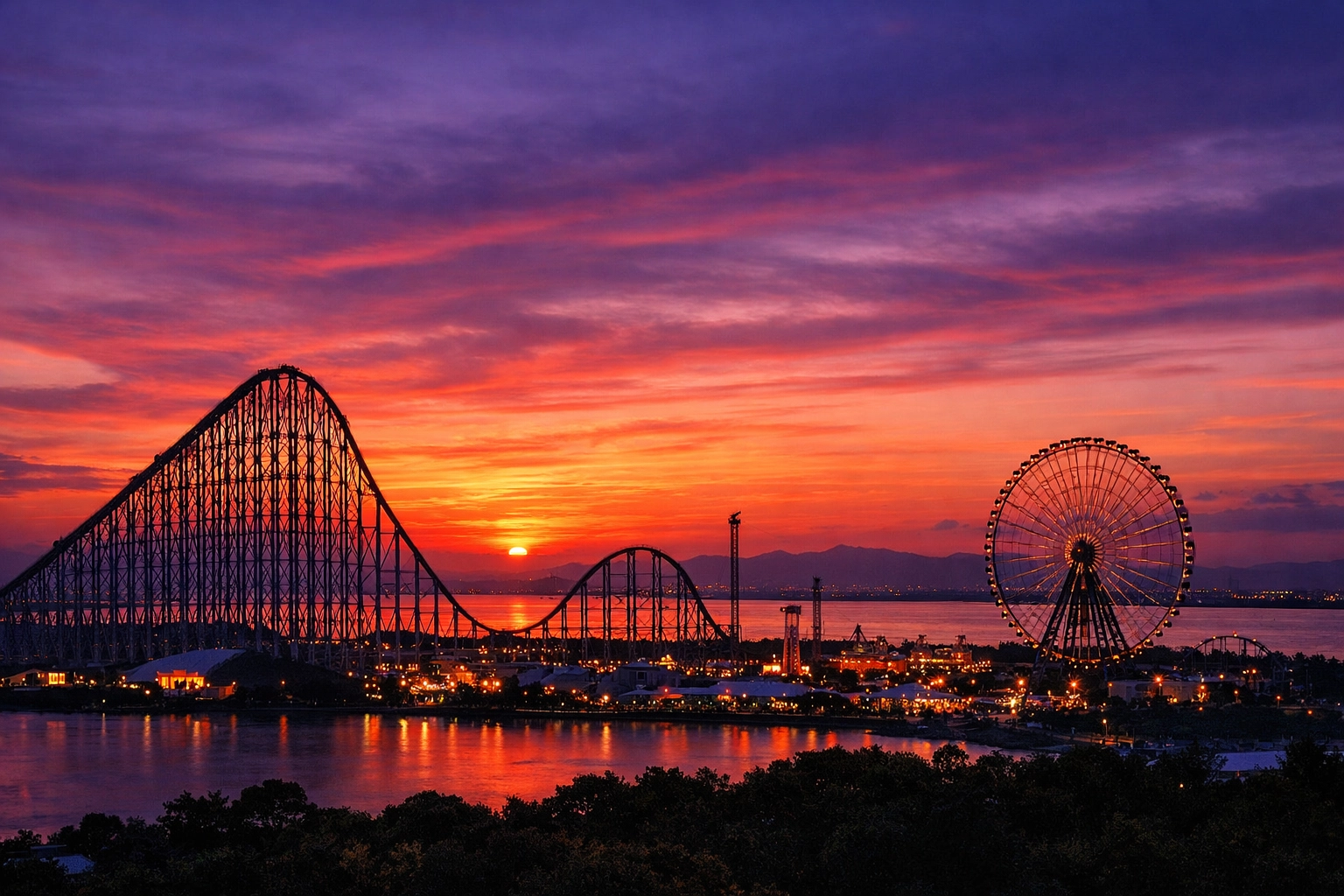
Steel Dragon 2000 is a beast. It’s the longest roller coaster in the world, and its lift hill looks like a ladder to heaven. To get the best shot of this, don't just stand at the entrance. Head toward the edges of the park where the track spans out over the walkways. Use a wide-angle lens to capture the sheer length of the track as it undulates against the sky.
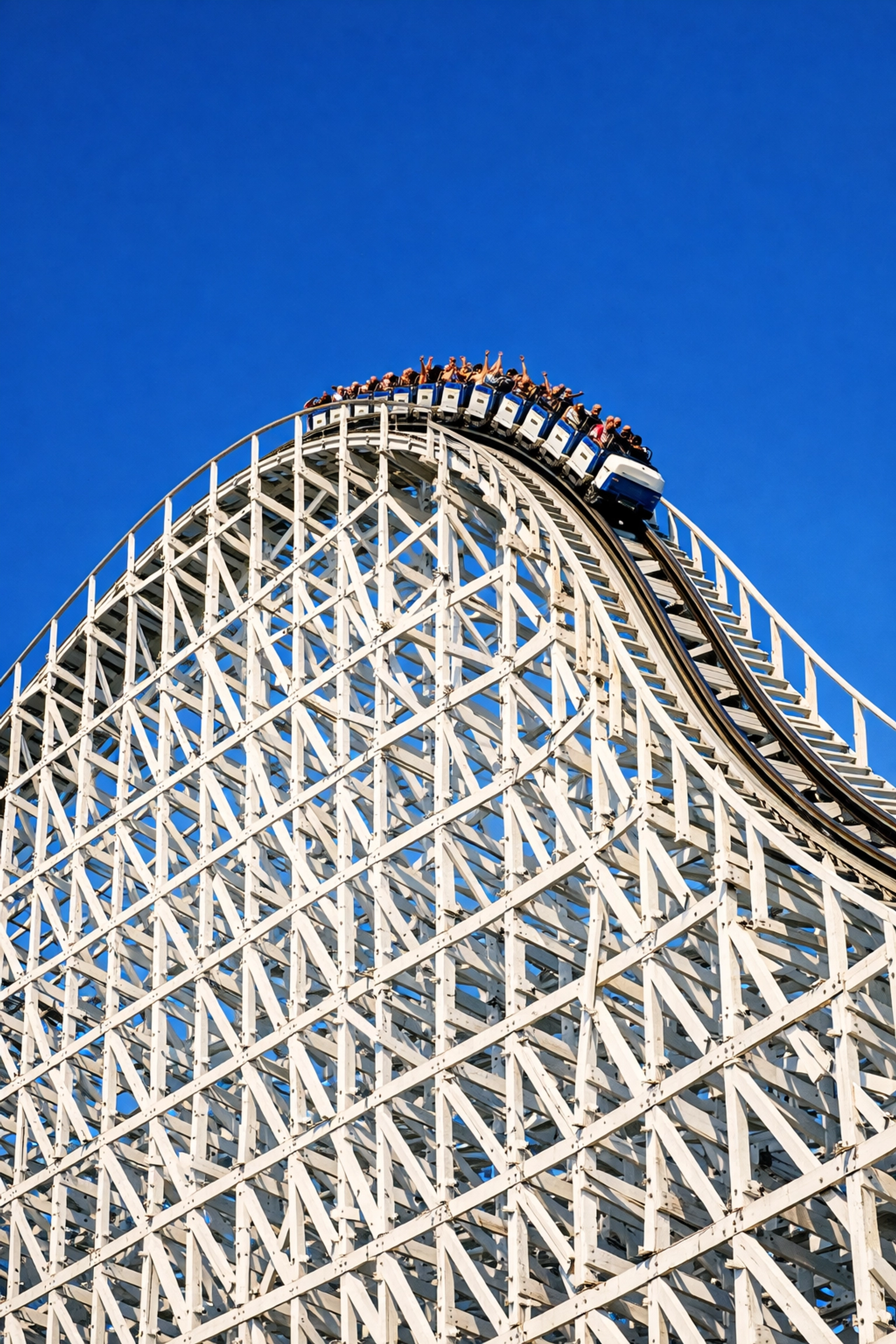
Then there’s Hakugei (The White Whale). This is a hybrid coaster: wood and steel: and it is arguably the most photogenic ride in Asia. The bright white wooden structure creates a complex, lattice-like pattern that looks incredible in high-contrast black and white or vibrant color.
Pro tip: Photography is strictly prohibited on the rides for safety. Don’t try to be a hero with a GoPro unless you want to spend your afternoon in the security office. Instead, focus on the "off-ride" angles. Find a spot where the train crests a hill or enters a zero-G roll.
Scaling the Heights: The Ferris Wheel and Island Fuji
If you want a bird’s-eye view of the park, you have two main options. The Aurora Wheel (the giant Ferris wheel) is a classic. From 90 meters up, you can see the entire layout of the park, the Ise Bay, and on a clear day in 2026, you might even spot the faint outline of Mount Fuji.
However, for a more unique perspective, check out Island Fuji. It’s a flying observation deck that rises 45 meters and rotates. It gives you a 360-degree panoramic view without the obstruction of the Ferris wheel gondola glass (though you are still behind a barrier). This is the place to capture the scale of the "Jumbo Pool" and the surrounding coastline.
If you’re looking to sharpen your general skills before tackling these high-altitude shots, check out our Mastering Photography: The Ultimate 2026 Guide for Every Skill Level.
Seasonal Magic: Nabana no Sato and the Illuminations
Nagashima Spa Land isn't just about adrenaline. Just a short shuttle ride away is Nabana no Sato, a botanical garden that transforms into a light-filled wonderland from late October through May.
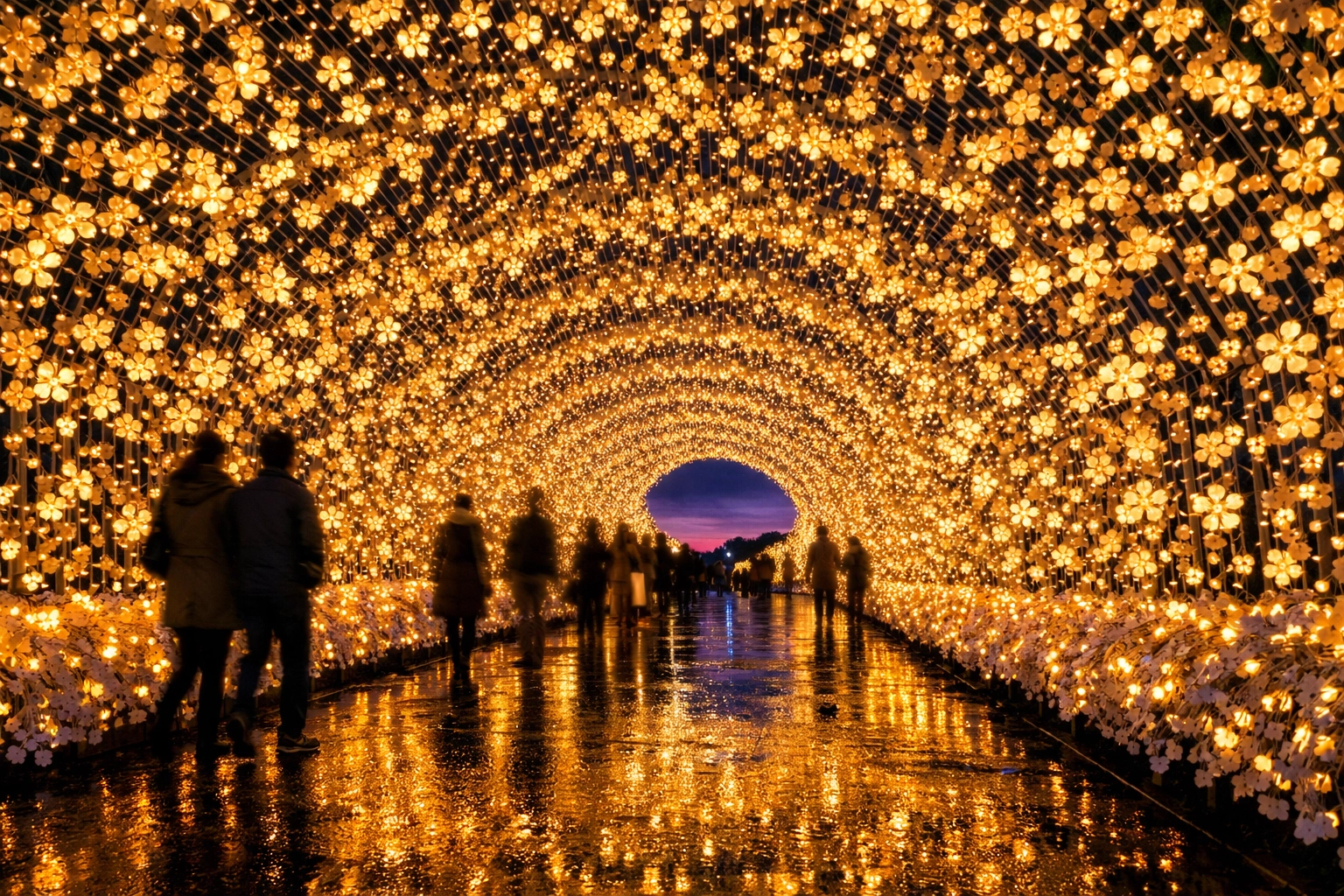
In 2026, the illuminations are bigger than ever. We’re talking about the famous "Tunnel of Lights": a 200-meter-long corridor of glowing flower-shaped LEDs. It is, without a doubt, one of the most popular photo spots in Japan.
How to photograph the lights:
- Bring a tripod: It’s dark, and you’ll want long exposures to get that "glow" without the grain.
- Timing is everything: Arrive just before sunset (Blue Hour). The sky will have a deep blue hue that complements the warm lights of the park perfectly.
- The Begonia Garden: If it starts to rain, head inside. The Begonia Garden is a massive indoor space filled with thousands of hanging flowers. It’s a great place to practice your macro photography.
For more inspiration on capturing these kinds of vibrant landscapes, you can see some of my work over at Edin Chavez Fine Art.
Staying Dry (and Keeping Your Gear Safe)
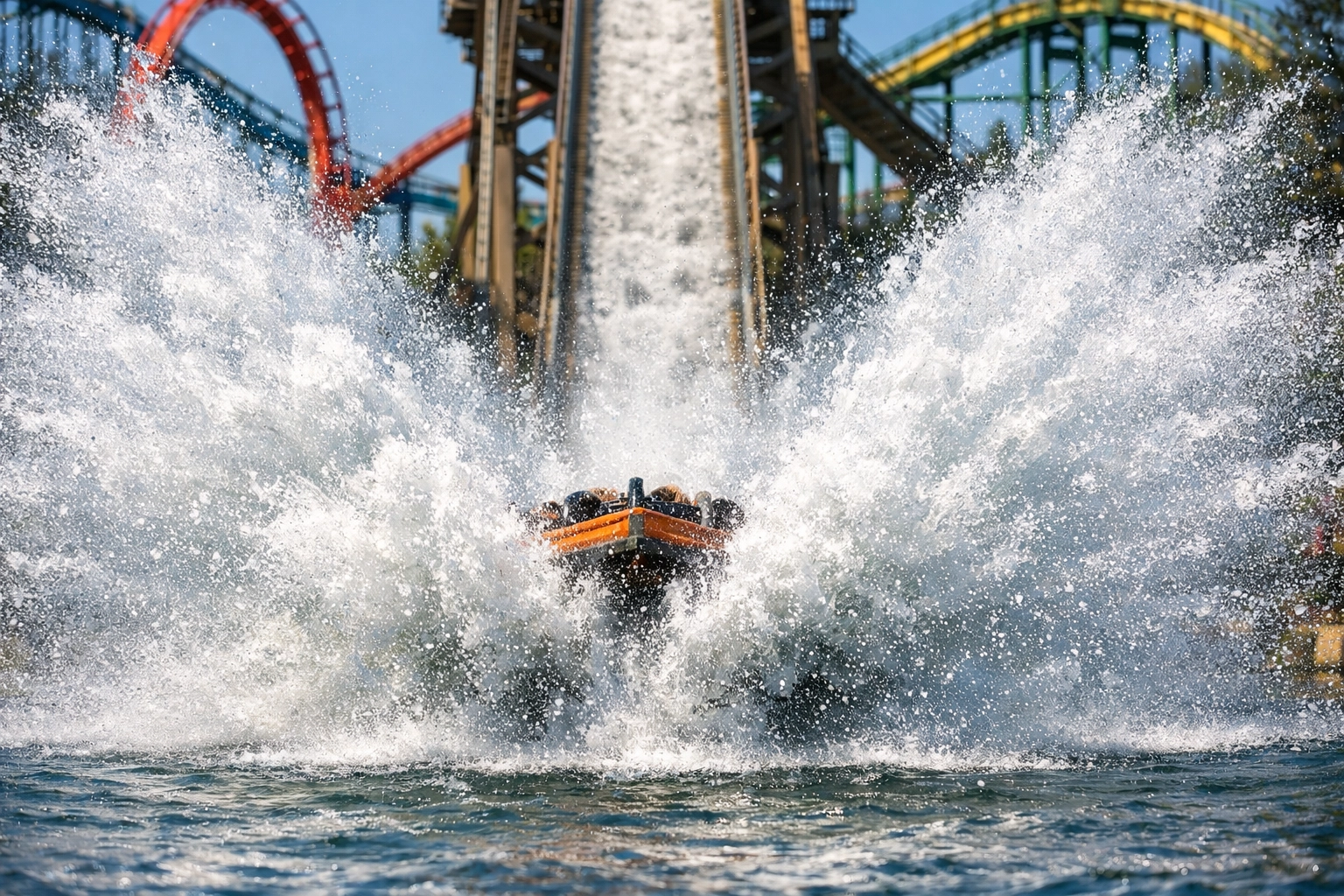
They don't call it "Spa Land" for nothing. Between the Jumbo Pool (one of the world's largest water parks) and rides like Shoot the Chute, there is a very high probability you will get soaked.
If you’re planning to photograph near the water attractions, gear protection is non-negotiable. I recommend a dedicated dry bag or a high-quality rain cover for your housing. Even the mist from the big splash-downs can wreak havoc on non-weather-sealed lenses.
If you’re looking for a new setup that can handle the elements, take a look at our Camera Reviews 2026 (updated for the latest tech) or browse the essential photography gear list. Sometimes a simple module 8 lens adapter can give your water shots a dreamy, cinematic look that hides any minor water spots on the glass.
Technical Strategy for Theme Park Photography
Theme parks are high-contrast environments. You’ve got bright white tracks, deep blue skies, and dark shadows under the supports.
- Polarizing Filter: This is your best friend. It will make the colors of the rides pop and cut down on the glare from the water or the shiny metal tracks.
- Shutter Speed: If you want to freeze a roller coaster train moving at 90mph, you need a shutter speed of at least 1/2000s.
- Motion Blur: Alternatively, try a slow shutter speed (around 1/15s or 1/30s) while panning with the train. This creates a sense of speed while keeping the "face" of the ride-goer (relatively) sharp.
If you’re feeling a bit overwhelmed by the technical side, jump over to Shut Your Aperture for some community tips and gear talk.
Logistics: Getting There and Getting In
Nagashima Spa Land is located in Kuwana, Mie. The easiest way to get there is by bus from Nagoya Station (it takes about 50 minutes).
If you want to make the most of your trip without worrying about the logistics of Japanese bus schedules, you can book a guided experience or transport via Viator. It often saves a lot of headache, especially when you’re carrying a heavy camera bag.
A few quick tips for your visit:
- Wear comfortable shoes: You will be walking a lot. The park is massive.
- Check the wind: Steel Dragon 2000 is notorious for closing if there’s even a slight breeze. Check the forecast before you head out.
- Lockers are available: Don’t carry everything all day. Use the lockers near the entrance for your heavy tripod until you need it for the evening illuminations.
Why Nagashima Spa Land is a 2026 Must-Visit
As we move through 2026, photography is becoming more about the "experience" and less about just standing in front of a monument. Nagashima Spa Land offers a dynamic environment where you can practice everything from high-speed action photography to delicate floral macro shots.
It’s a place of contrasts: the roar of the Steel Dragon followed by the silence of the Nabana no Sato flower gardens.
If you’re planning a larger trip around Japan or even just a cheap weekend getaway, make sure this spot is on your radar. For more location guides and deep dives into the world of photography, keep an eye on my personal blog.
Now, grab your camera, pack a poncho, and go get those shots. Just remember: keep your eyes on the viewfinder and your gear out of the splash zone!
Category: Photo Guides