Let’s be honest for a second. When most people think of Tokyo, they see neon lights, high-tech toilets, and eye-watering price tags. There’s this persistent myth that if you want to eat well in the Japanese capital, you need to be prepared to drop half your monthly rent on a single multi-course omakase meal.
I’m here to tell you that couldn’t be further from the truth. In fact, Tokyo might just be one of the best cities in the world for budget travel food. You can eat like a king: or at least a very well-fed local: for less than the price of a mediocre burger back home.
As part of our mission at Photoguides, we want to make sure you’re not just taking great photos, but also living your best life while doing it. Whether you are traveling for a cheap weekend getaway or a month-long expedition, mastering the art of the Tokyo "cheap eat" is a game-changer.
Here are the secrets the "experts" usually gloss over in favor of Michelin stars.
The Magic of the "Teishoku" (The Lunch Set)
If there is one word you need to memorize before landing at Narita, it’s Teishoku.
In many Western cities, "budget" usually means "fast food." In Tokyo, budget means a nutritionally balanced, incredibly delicious set meal. A typical Teishoku includes a main dish (like grilled fish, tonkatsu, or ginger pork), a bowl of rice, miso soup, and a side of pickles or salad.
The secret? Go during lunch. Restaurants that charge $50+ for dinner often have lunch sets for under $10 (¥1,500). It’s the same high-quality ingredients, just served in a more casual format. Places like Ootoya or Yayoiken are reliable chains, but the real gems are the small, family-run "shokudo" (cafeterias) tucked away in the basements of office buildings.

The "Conbini" Lifestyle: More Than Just a Snack
I’ve spent a lot of time traveling, and I can say with total confidence that Japanese convenience stores (Conbini) are in a league of their own. We’re talking about 7-Eleven, Lawson, and FamilyMart.
Forget the soggy sandwiches you find at gas stations in the States. A Japanese 7-Eleven is a goldmine for best cheap eats.
- Onigiri (Rice Balls): For about $1.50, you get a fresh, seaweed-wrapped rice ball filled with tuna mayo, pickled plum, or spicy cod roe. Two of these and a hot tea make a perfect breakfast.
- Egg Salad Sandwiches: Even Anthony Bourdain swore by these. They are creamy, fluffy, and cost less than $3.
- Hot Snacks: Don’t sleep on the "Famichiki" (FamilyMart’s fried chicken). It’s juicy, crispy, and legendary among budget travelers.
If you’re looking to save money to invest in essential photography gear, eating one meal a day from a conbini is the easiest way to pad your budget.
Standing Room Only: The "Tachigui" Experience
If you see a tiny shop with no chairs and a line of salarymen eating at lightning speed, you’ve found a Tachigui (standing) restaurant. These are usually located inside or just outside train stations.
The most common version is standing soba or udon. You walk up to a vending machine, pick your noodles (usually around ¥400–¥600), hand the ticket to the chef, and 30 seconds later, you’re eating a steaming bowl of noodles. It’s efficient, it’s authentic, and it’s incredibly cheap.
There are even standing sushi bars, like Uogashi Nihon-ichi, where you can get incredibly fresh nigiri for about $1 a piece. Since there are no chairs, the turnover is high, which keeps the prices low and the fish fresh.
The Depachika "Happy Hour"
One of my favorite Tokyo food secrets is the Depachika. These are the basement food halls of massive department stores like Isetan, Mitsukoshi, or Tokyu.
By day, these places are high-end food boutiques selling $100 melons and artisan bento boxes. But here’s the trick: show up about 30 to 60 minutes before closing time (usually around 7:30 PM or 8:00 PM).
As closing time approaches, staff start frantically slapping discount stickers on everything. You can grab a gourmet bento box, high-end sushi sets, or premium yakitori for 30%, 50%, or even 70% off. Take your haul back to your hotel or find a nearby park and enjoy a world-class feast for a few dollars.

Vending Machine Culture and Ticket Dining
For many travelers, the language barrier is the scariest part of finding budget travel food. Tokyo has a built-in solution: the ticket machine.
Many of the city’s best ramen and gyudon (beef bowl) shops use a vending machine at the entrance. You browse the pictures, insert your yen, and take your ticket to the counter. No complex Japanese required.
- Gyudon Chains: Look for Yoshinoya, Matsuya, or Sukiya. A "Gyumeshi" (beef on rice) with miso soup will set you back about $4. It’s the ultimate "I’m hungry and on a budget" meal.
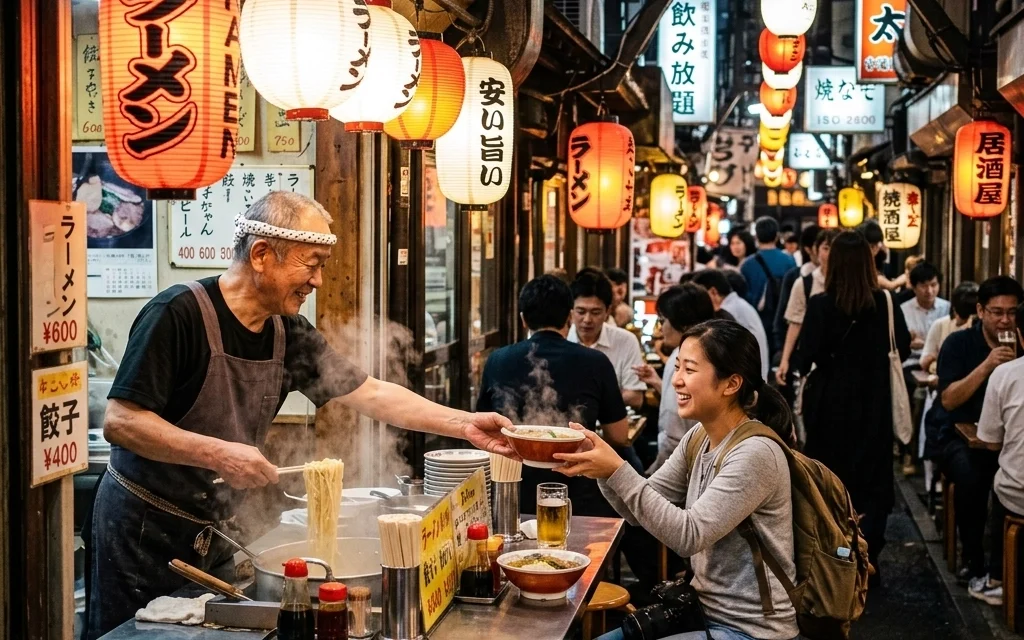
- Ramen Alleys: While some famous ramen spots have long lines and high prices, you can find incredible bowls in places like Shinjuku’s "Omoide Yokocho" (Memory Lane) or under the train tracks in Yurakucho for under ¥1,000.
Photography Tip: Capturing Your Meal
When you’re eating at these local spots, the lighting can be… challenging. Usually, it's harsh fluorescent overheads or dim, warm lanterns. If you want to share your Tokyo food journey on your blog or social media, remember that "less is more."
Don't use a flash: it kills the mood and annoys the other diners. Instead, try to sit near a window or use the ambient light to create shadows that give the food texture. If you're serious about your craft, check out some of the camera reviews for 2024 to find a body that handles high ISO well for those dim ramen shops. You can also see how Edin Chavez handles light and composition on his Fine Art site for some inspiration.

Where to Focus Your Search
If you’re wondering which neighborhoods offer the best bang for your buck, here’s a quick cheat sheet:
- Asakusa: While touristy, the side streets are filled with traditional, affordable snacks like Senbei (rice crackers) and Age-manju (fried bean cakes).
- Ueno: Head to the Ameyoko market. It’s chaotic, loud, and full of street food stalls selling everything from takoyaki to fresh fruit skewers.
- Shimokitazawa: Known for its vintage shops, it’s also the curry capital of Tokyo. You can find massive, filling bowls of soup curry that won’t break the bank.
- Nakano: Often overlooked by tourists, the Broadway area is a haven for cheap ramen and daily specials aimed at local residents.
Don't Forget the Water
In many countries, you have to pay for water at a restaurant. In Tokyo, cold water or hot green tea is almost always provided for free as soon as you sit down. It’s a small detail, but when you’re strictly sticking to a budget, those $3 sodas add up. Stick to the free tea: it’s better for you anyway!
Final Thoughts
Tokyo isn't a city that wants to drain your wallet; it’s a city that values quality at every price point. The "secret" is simply to eat where the locals eat. Follow the office workers, look for the ticket machines, and don't be afraid to eat while standing up.
By saving money on your meals, you can spend more on the things that really matter: like exploring the city’s hidden corners or upgrading your lens at a shop in Akihabara. For more travel tips and photography insights, be sure to browse the Photoguides blog or check out our educational resources.
If you're worried about your gear while navigating the crowded markets of Ueno, make sure to read up on essential photography gear and how to keep it safe. And if you're looking for more gear-specific advice, Shut Your Aperture is a great community to join.
Tokyo is waiting for you. Go hungry, leave happy, and keep your camera ready.